Austin Metric

Homestead Exemption Effects

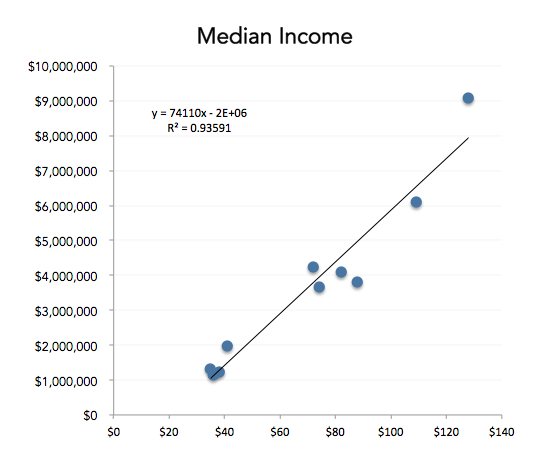
Adoption of a 20% homestead exemption (HEx) would shift City taxation away from affluent, low-density Council districts towards the middle-class and Latino neighborhoods.

hex-scatter-median-income

The following visualizations compare each district's share of tax cuts/revenue loss against several demographic factors.  The tax data sources are TCAD & WCAD files analyzed by Dylan …

[MORE]

Quantity & Quality

Improving Austin government's public engagement process requires procedures and tools that separate the two major goals of citizen input: uncovering insightful information and assessing political support.  As long as engagement routines mix both goals together, sub-optimal engagement is likely.

sub-committe-meeting

Quantity

The crowds that show up on key votes or public …

[MORE]

Anti-growth pains

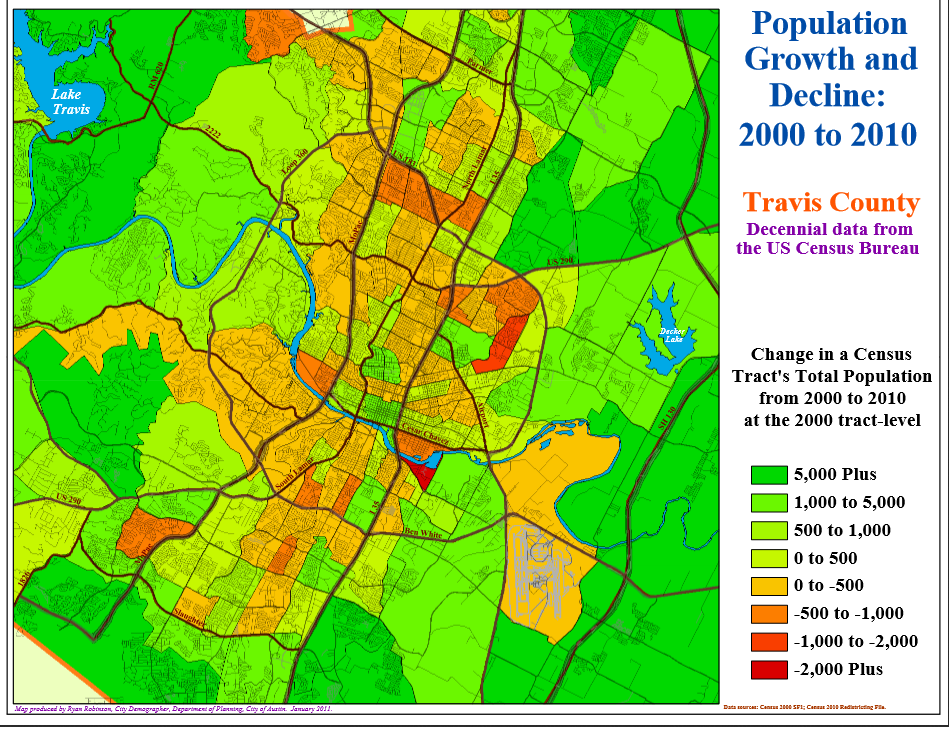
Proponents of 'slowing' or 'managing' Austin's growth typically advance policies that will improve the City's desirability. As a result, while their discourse concerns itself with growth deceleration, their implied solutions are actually additional sprawl and unnecessarily high prices.

atx_pop_change_2010

For example, in this interview, a new Council Member explains a desire …

[MORE]

Good Move

Austin's local government officials should play board games. Many of our most pressing local public policy problems would benefit from overhauls in strategy, as well as creativity in how we manage risk. Playing board games can help by strengthening the following five problem-solving habits:

lostcities

1. 'Victory Points'

Board games provide …

[MORE]

The Homestead Exemption debate in 2 minutes

A City of Austin 20% homestead exemption is a tax shift policy that is likely to get a lot of attention from the incoming City Council. Here's what you need to know.

1. What is it exactly?

The 20% homestead exemption (HEx) reduces the assessed value of one's primary residence …

[MORE]